A while back, I read a history book, Crossing the Continent, by Robert Goodwin, about Esteban, an enslaved Black man who was a member of Coronado’s expeditions to the Americas. The expedition shipwrecked in the Gulf of Mexico and the survivors walked for 8 years across the southwest back to Mexico City. The first chapter sets the historical stage in Seville, along the docks where Esteban was brought before being sent on the Narvaez Expedition with Cabeza de Vaca. Even though Seville is well inland, it is a port city to the Atlantic. (Columbus is buried in its Cathedral.)
In February, Elena and I took a week in Spain. We visited our friends in Madrid and then headed south to Seville for a week of sun, Spanish classes, and flamenco. We rented an apartment in Triana, a district of Seville across the Guadilqivir River and the home of flamenco. The flamenco was fabulous. The Spanish class challenging. The food delicious. As I walked across the bridge on my way to class each morning and along the river during walks, I imagined the bustle and confusion of 16th century Spain. As I walked through the Cathedral, dripping in gold and silver, I was reminded of the reconquest of Spain from the Moors (the appropriation of mosques and castles) and the pillage of the Americas by the Spanish (the gold and silver was from melted down Meso-American artifacts and from enslaved labor in the mines of the Andes. Pirate lore of golden treasure is historically rooted in the transport of this treasure back to Europe).
Eating in Spain also provides reminders of historical transactions. The contrast of savory and sweet — fried eggplant with honey — the use of tomatoes, hot chocolate and churros are all possible because of trade. In Cordoba, I had a pre-Columbian mazamorra Cordobesa one night. This is a creamy soup made with almonds and bread. Before Columbus, there were no tomatoes for gazpacho or salmorejo. Food for thought.
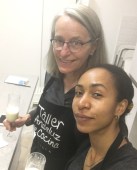 Our first night in Seville, we sat at an outdoor cafe, had a glass of wine, and discovered Espinacas con Garbanzos. This was to be our go to order at every bar and restaurant we visited. We ate it in street side cafes and cafes in small plazas. We also booked a cooking class in the Mercado in Triana, Seville — Taller Andaluz de Cocina. We booked the class based on the menu — a key dish? Espinacas con Garbanzos. It is an ideal vegetarian week night meal.
But I needed to practice! The answer? An evening of tapas. Tapas can be quite simple. The deliciousness comes from the freshness and quality of ingredients — including the olive oil. For my tapas dinner, I fixed tuna with roasted peppers, patatas bravas, espinacas con garbanzos, olives and cheese (photo above). We finished off the meal with some oranges and olive oil.
I bought fancy tuna packed in olive oil in a jar (not a can.) The taste was remarkably different in a good way. One jar provided a lot of tuna. Served with strips of roasted red pepper drizzled in olive oil.
Patatas bravas. I cut purple and red potatoes into chunks, tossed them in some olive oil with a sprinkle of kosher salt and roasted them in the oven. I served them with a spicy tomato sauce (minced garlic sauteed in olive oil, 1/2 a cup of tomato puree, 1 tsp of smoked Spanish paprika picante, and a bit of salt). The potatoes were served on top of the sauce with some fake aioli on the side (mayonnaise with garlic, lemon juice and olive oil.)
Tomato salad. A variety of flavorful tomatoes, thinly sliced red onions, a few strips of green pepper, salt, pepper, sherry vinegar and olive oil.
Olives from Fairway marinated with garlic cloves, a bay leaf, lemon juice and olive oil.
And…
Espinacas con Garbanzos
- 1 pound of fresh spinach
- 1 cup of cooked chickpeas (from a can)
- 1 medium size onion
- 4 garlic cloves
- 1 piece of stale white bread or a small roll
- 1/2 cup tablespoons tomato puree
- 1 tsp ground cumin
- 1 tsp smoked hot paprika
- 1 teaspoon sherry vinegar
- extra virgin olive oil
- salt
Bring a pot of lightly salted water to a boil. Boil the spinach for 5-6 minutes and set aside — the spinach should be a bit soggy.
Heat 4-5 tablespoons of olive oil in a large frying pan. Saute the sliced garlic on low heat until golden. Remove the garlic from the oil. Dice and fry the bread in the same oil until golden and crunchy. Crush together (I used my mini food processor – we used a mortar and pestle in Spain) and add a tablespoon or three of the spinach water to form a thick paste. This paste is going to work as the thickening agent for the spinach and garbanzo beans.
In the same pan, fry the chopped onion with a pinch of salt until caramelized. Add the tomato puree and cook for 2 minutes, until the oil separates a bit. Add the boiled spinach with some of the spinach water the bread paste, a teaspoon of alt, another teaspoon of cumin and 2 teaspoons of sherry vinegar to the pan.
Stir in the chickpeas, mix well, and cook until the liquid reduces. Let it rest a few minutes before serving.
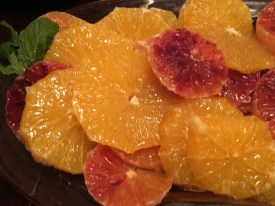
Dessert was oranges with honey and olive oil. Peel the oranges removing all white pith, slice into rounds. Drizzle with honey and let macerate a while. Just before serving, drizzle with high quality olive oil and sprinkle with finishing salt like fleur de sel or Maldon sea salt.
 Principal of Cooking