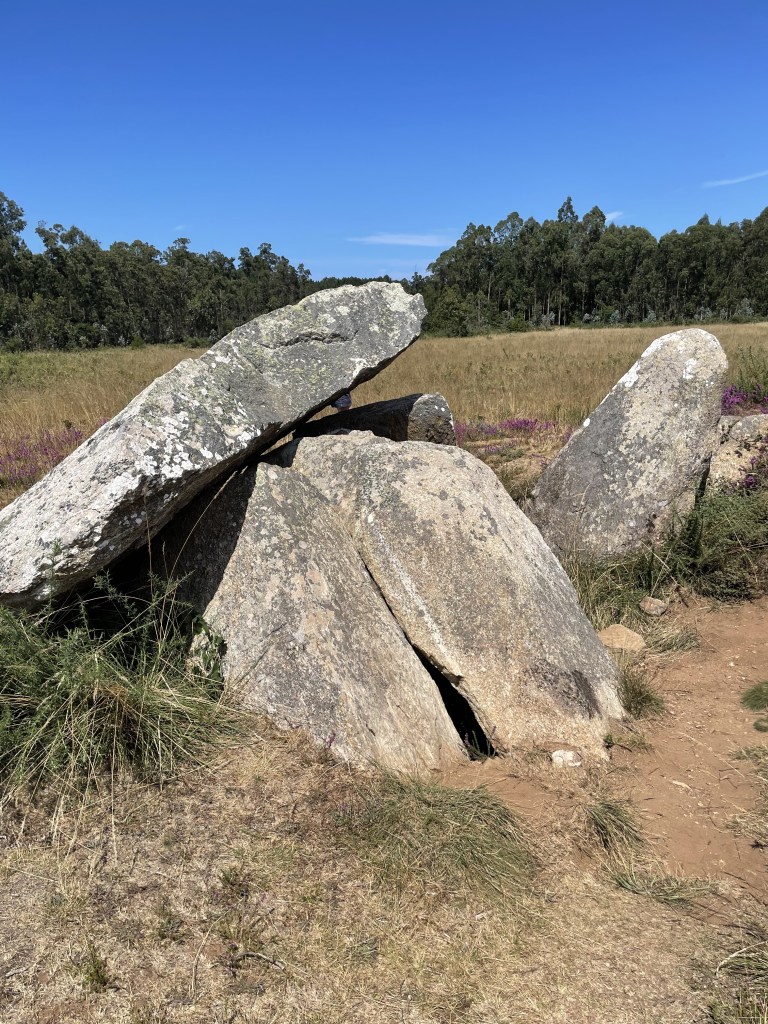
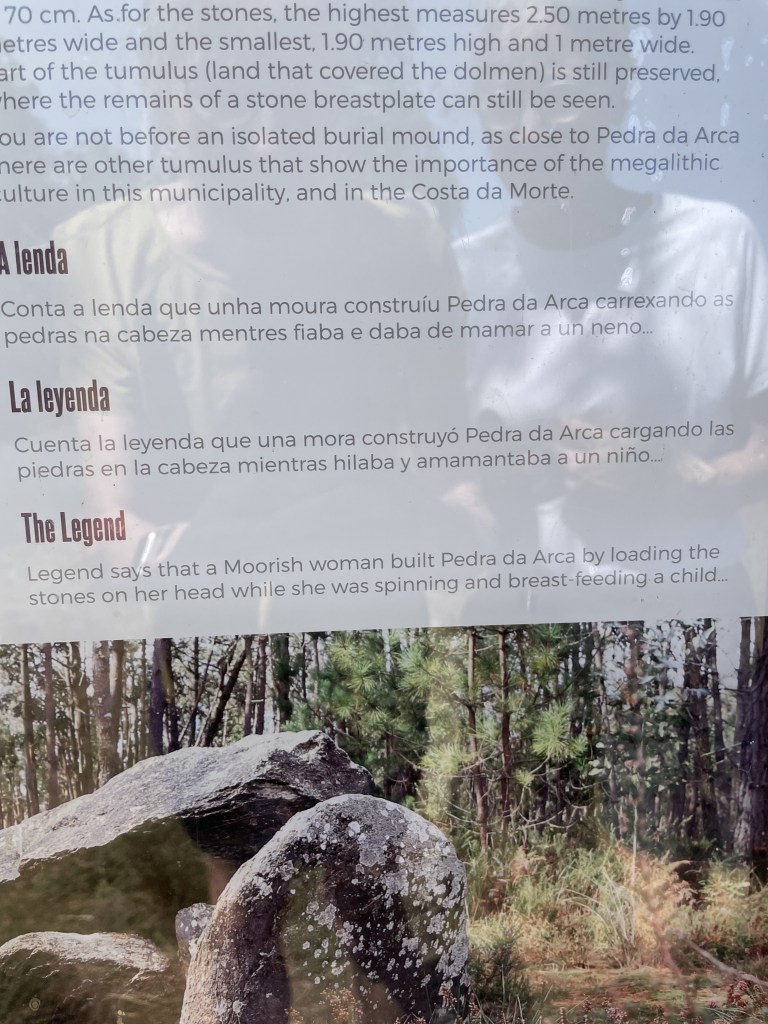
I spent two weeks this past summer exploring Galicia, the region of Spain in the northwest of the country. Galicia has beautiful countryside and history. Settled in neolithic times, you can see the remains of dolmens, menhirs, and forts. At some point, it was also settled by Romans and Celts. And the Spanish. It was its own country for a while with its own language, Gallego which is similar to both Spanish and Portuguese. During Franco’s reign, the Gallego language was really restricted (even though Franco was from Galicia). There is now a movement to restore this heritage language. The signs at historical and cultural sites, menus, and road signs were all bilingual in Gallego and Spanish. While Spanish continues to be the language of instruction in schools, instruction in Galician language and culture is mandatory. Because teachers are not fluent in Gallego and there are limited instructional materials, bilingualism is limited. More children in rural areas speak Gallego than children in more urban areas. One article I read referred to students who have Gallego as their mother tongue are actively bilingual whereas children whose mother tongue is Spanish are passively bilingual.
When we were traveling around, we saw a lot of older folks. It turns out that Galicia is suffering a slow population decline. It is one of the less developed regions of Spain. Its resources are exported, and little economic activity is supported. There is an active autonomous movement like that in Catalunya and the Basque country. It is just much less known and has less political power. As an area with an older population, it is also more conservative.
Probably what Galicia is most famous for is Santiago de Compostela, the church that houses the relics of St James the Apostle. The story goes that he traveled the Iberian Peninsula to share the story of Jesus. When he died in the Middle East, his followers transported his body to northwest Spain. Upon landing, there was a vision of Mary who blessed his body and his followers. A church was built at that site. Later, a church leader who wanted to consolidate power, brought his remains to the Cathedral in Compostela. Somehow, all this got translated into being a destination of pilgrims since the time of the Middle Ages. People continue to walk the various Caminos (from France, Madrid, Portugal, England) for religious, spiritual, and personal reasons.
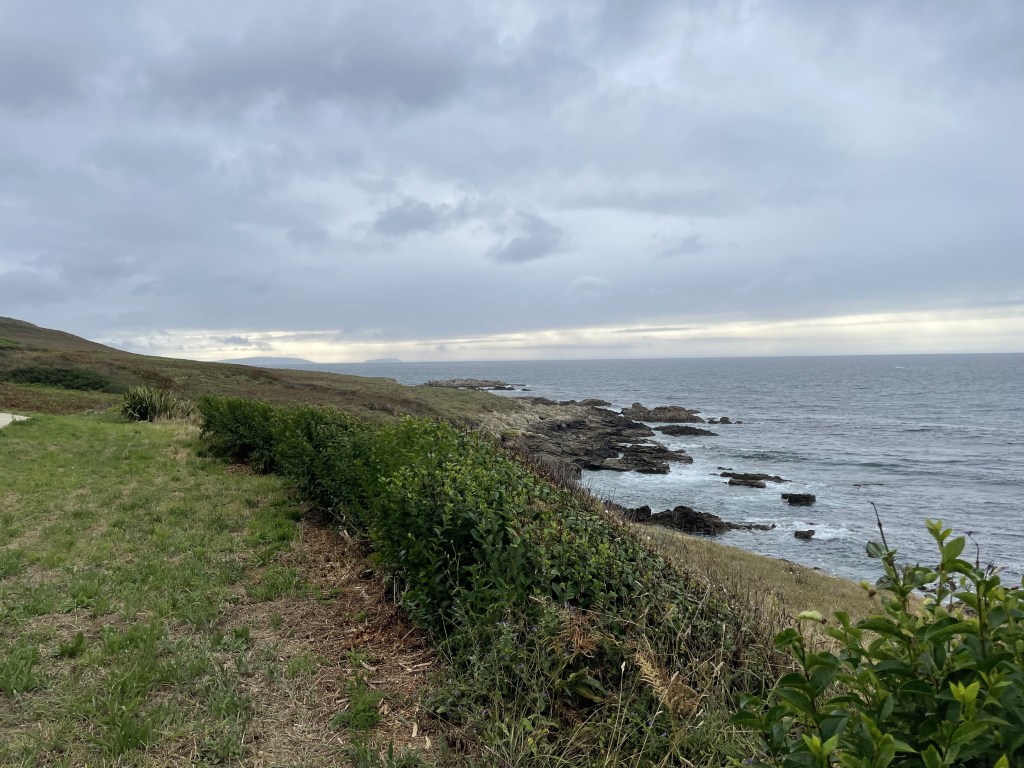
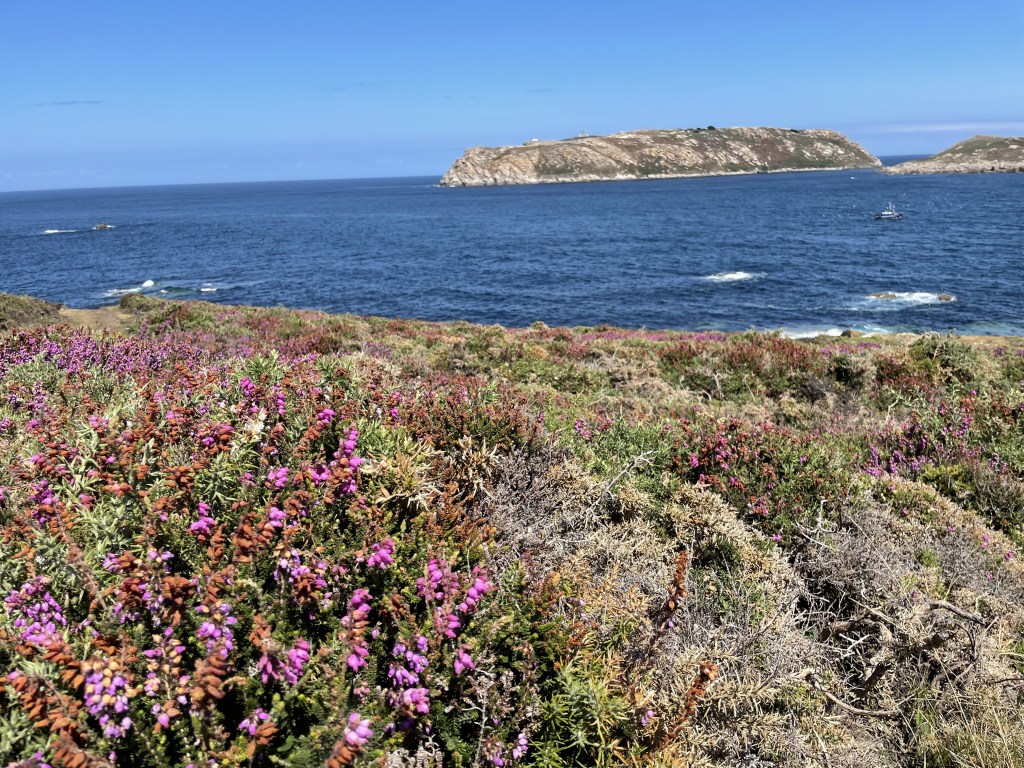
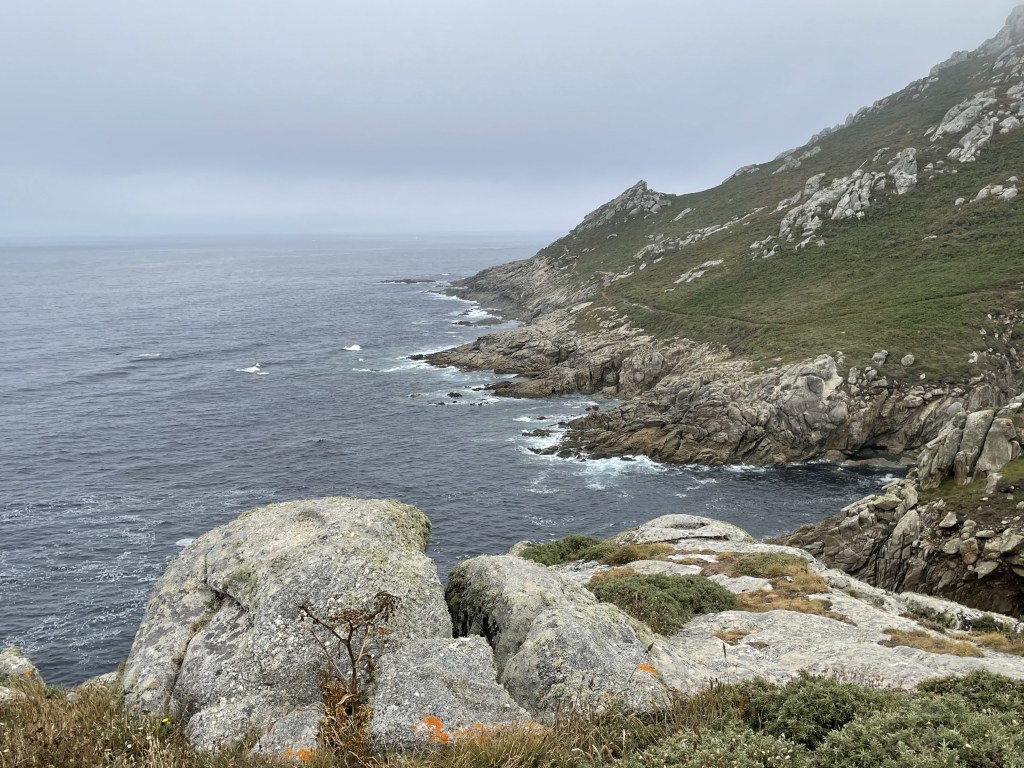
We did a lot of walking in Galicia. The rocky coastline has numerous hiking trails that trace rocky cliffs interspersed with fine sandy coves and beaches. In July, the cliffs were covered with blossoming heather and gorse. The ocean was clear, clean, and cold with contrasts of turquoise blue, dark blue and white foam.

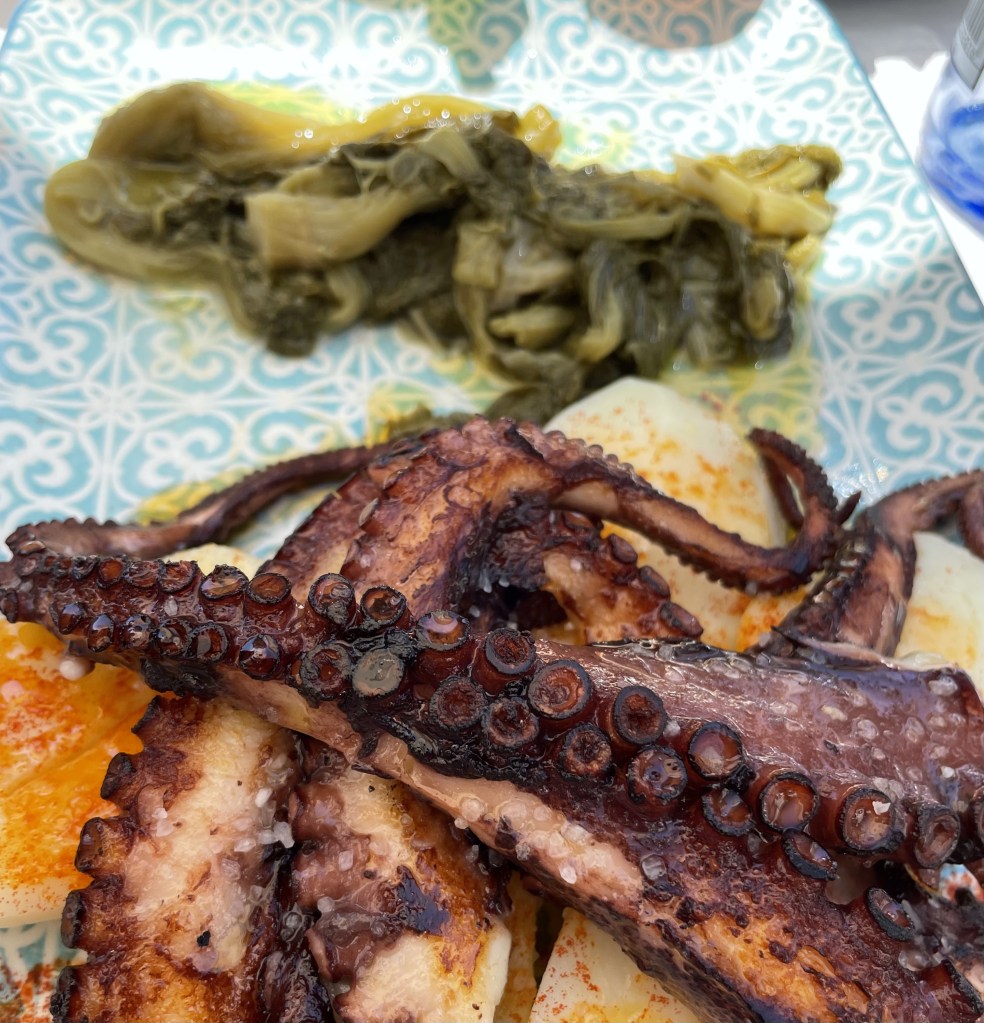
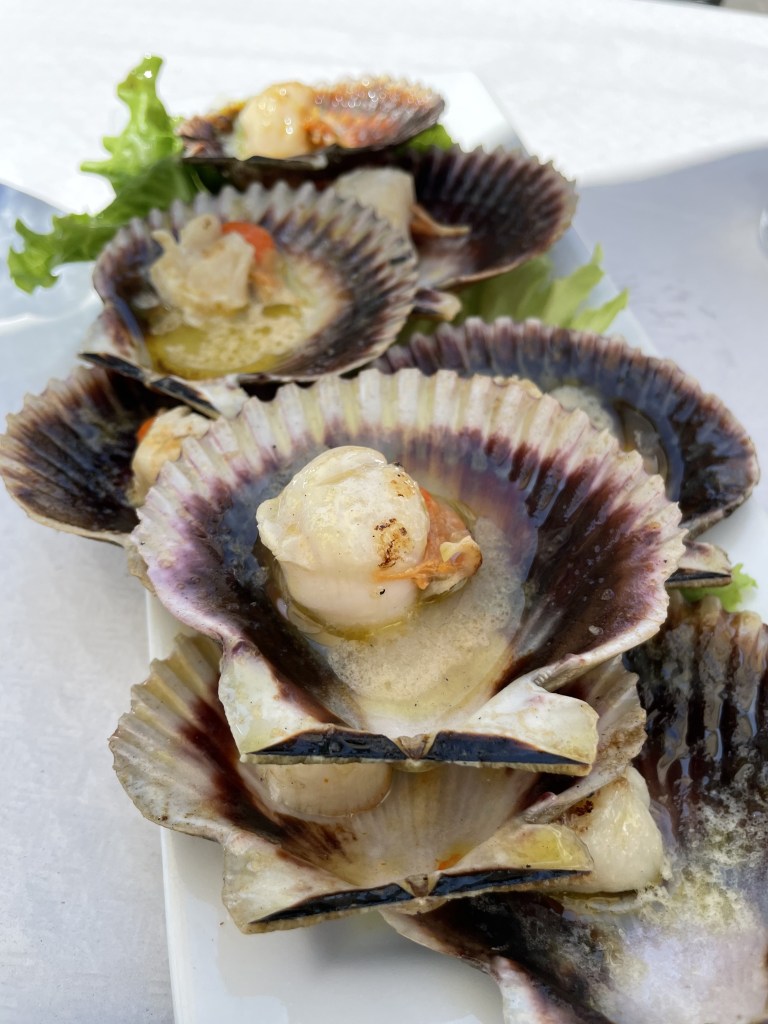
All that ocean meant a lot of seafood! We ate clams and razor clams and scallops. Squid, octopus, and sardines. Gooseneck barnacles. Hake and cod. All beautifully and simply prepared. It is also famous for two other dishes now associated with the Camino: Tarte de Santiago and Empanadas Gallegos. The Tarte de Santiago is an almond tart dusted with powdered sugar that is in the windows of all the bakeries and tourist shops. Empanadas in Galicia are not hand pies like in Latin America. They are more like a sheet pie and served in squares like Neapolitan pizza.


There is written evidence of empanadas from the 7th century and pilgrims supposedly ate them as a convenient way of transporting food. Empanada Gallegos are so important that they are carved into the 12th century Portico of Glory on the Cathedral at Compostela. It is an image of a person eating an empanada – a warning of the sin of gluttony! Gluttony would be easy to achieve with all the delicious food I had in Galicia this summer.
To bring back a bit of the feeling of summer in the north of Spain, I decided to try my hand at an Empanada Gallega.
While there are all kinds of fillings for empanadas, the most common is a combination of sautéed onions, peppers, and tuna. This recipe comes from Javier de la Hormaza, a Basque chef working in England.
The filling
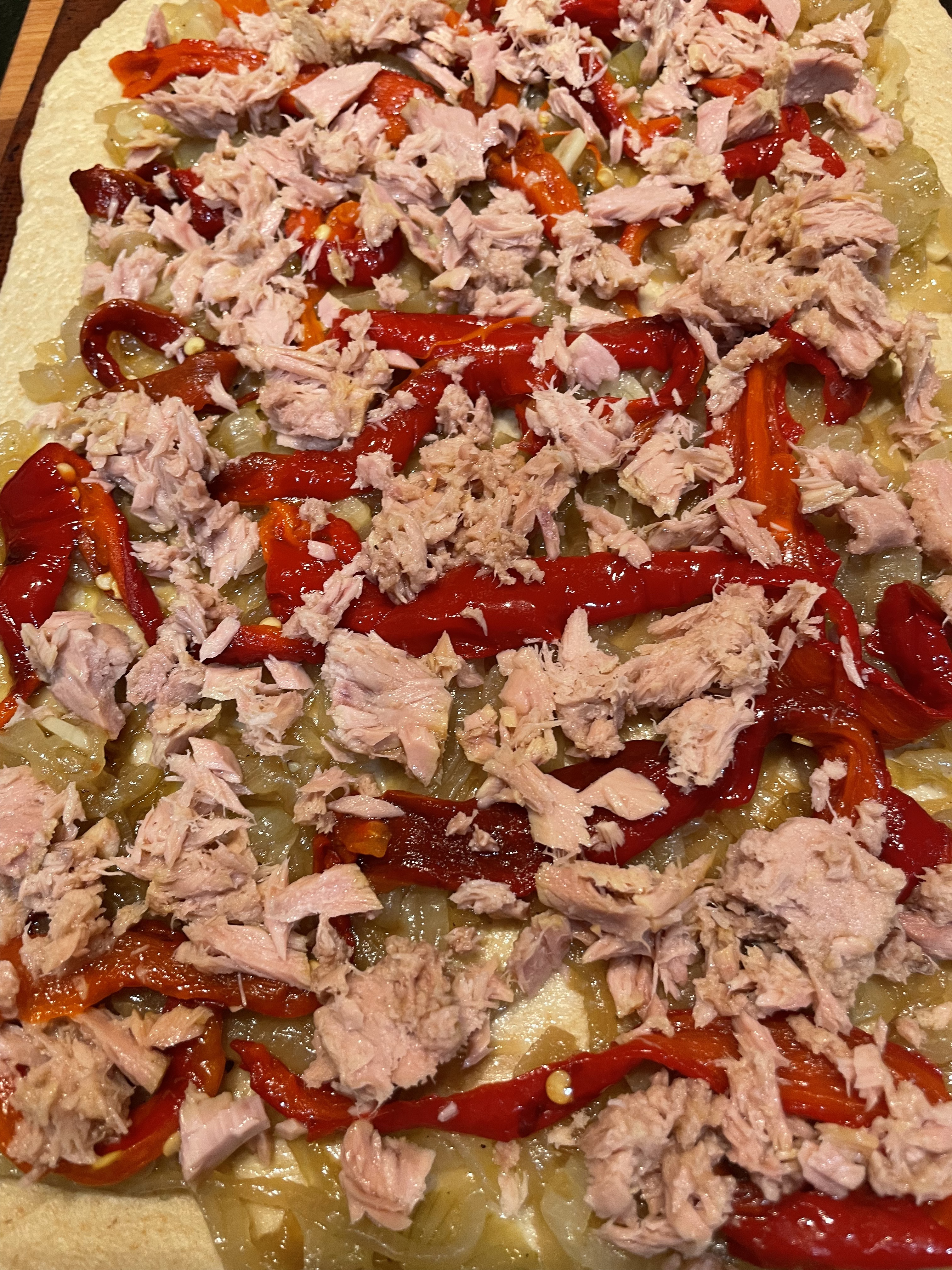
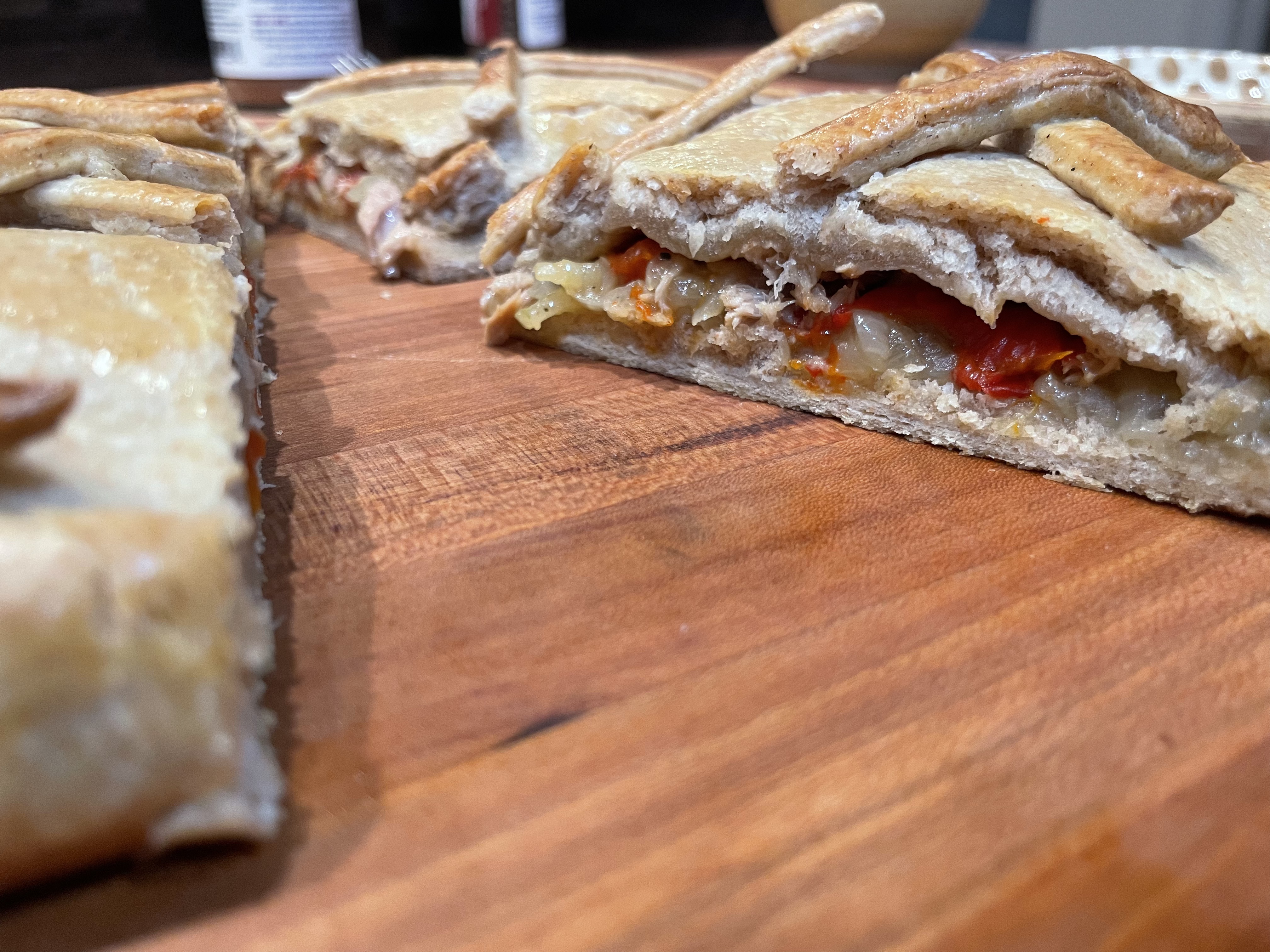
Sautée 3 finely sliced red peppers, 2 finely sliced onions, a minced garlic clove and a bay leaf in 100 ml of olive oil along with the oil from 2 cans of bonita tuna packed in oil. Cook over low heat for 10 to 15 minutes until the vegetables have softened and the onions are translucent. (Tuna in oil has a richer taste that tuna packed in water). Remove the vegetables from the pan leaving the oil behind. Let cool and then add the flaked tuna from the two cans and two diced hard boiled eggs.
The pastry
Use a stand mixer and a dough hook to make the dough. Put 500 grams of flour and 20 grams of salt in the bowl. Add two packages of yeast to 165 ml of warm water and stir to dissolve the yeast. While running the mixer on low speed, add the yeast water until the water is mixed in. Then add and 100 ml of oil – use the oil from the sautéed filling and any additional needed to make 100 ml. Continue to run the mixer for about 10 minutes to knead the dough. Remove the dough from the bowl and knead by hand for a few minutes. You want the dough to be soft and elastic. Shape the dough into a ball, place in a clean bowl, dust it with flour, cover and let rest for about an hour.
Preheat the oven to 360.
Line a half sheet pan with baking parchment paper or a silpat.
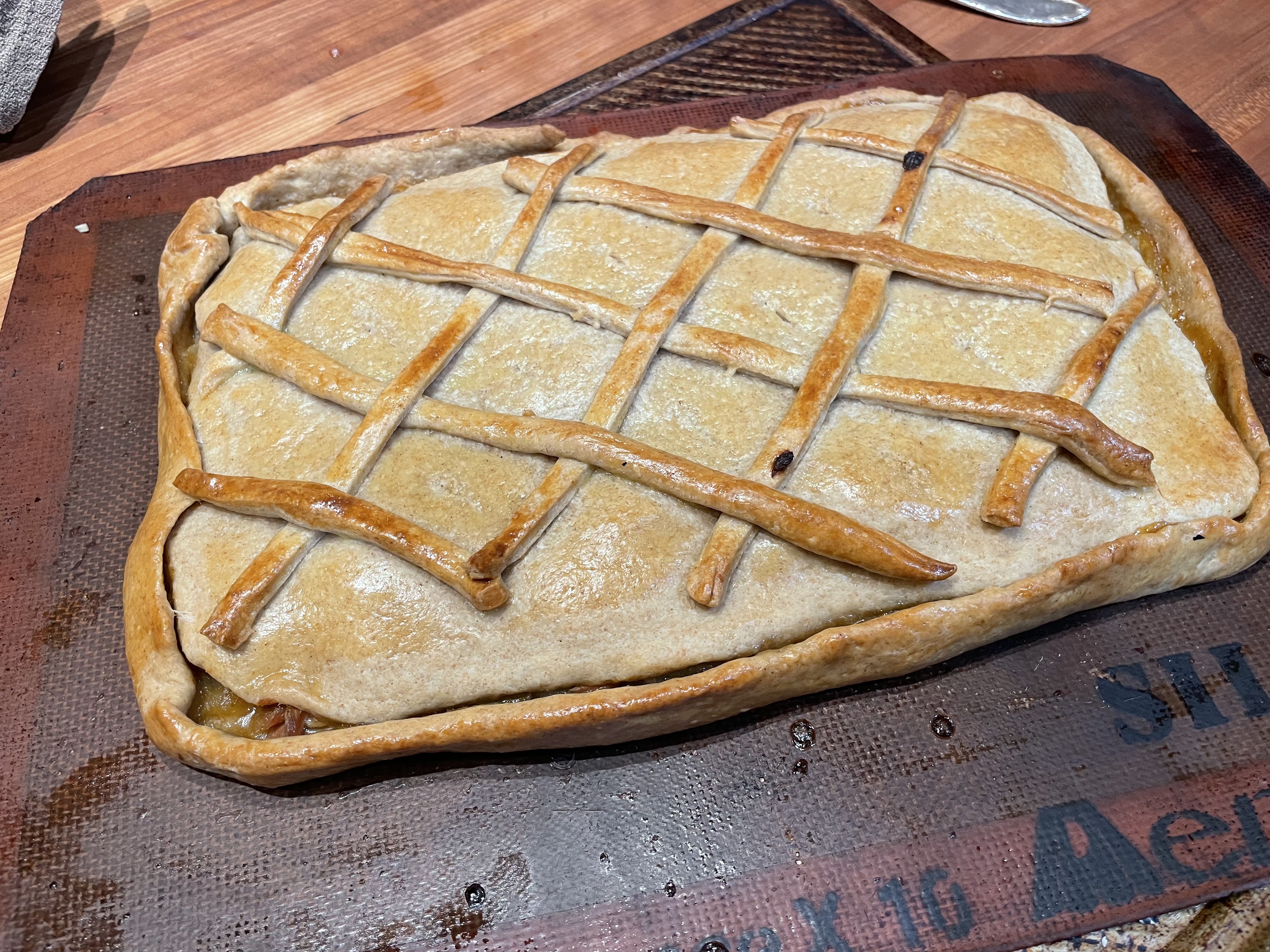
Remove the dough from the bowl and knead it a few times. Divide the dough in half. Roll each half into rectangles about the same size to fit the size of the sheet pan. It should be about 1/4 inch thick. Put one of the rectangles on the sheet pan. Spread the vegetable tuna filling on it leaving a 1 inch border. Cover with the other rectangle. Using your fingers, seal the edges of the tart (you can see that I didn’t do that too well). You can use strips of left over dough to create a design on top of the tart. Cut a few holes in the top crust to let steam escape. Brush with egg wash and bake for 35 minutes until golden.

 Principal of Cooking