Recently, I organized my spice cabinet. I have a remarkable number of different types of peppers. I don’t mean black pepper, pink pepper, or white pepper – the spices we know from south and southeast Asia. I mean capiscum annum — the typically dried red peppers that are associated with hot food around the globe.
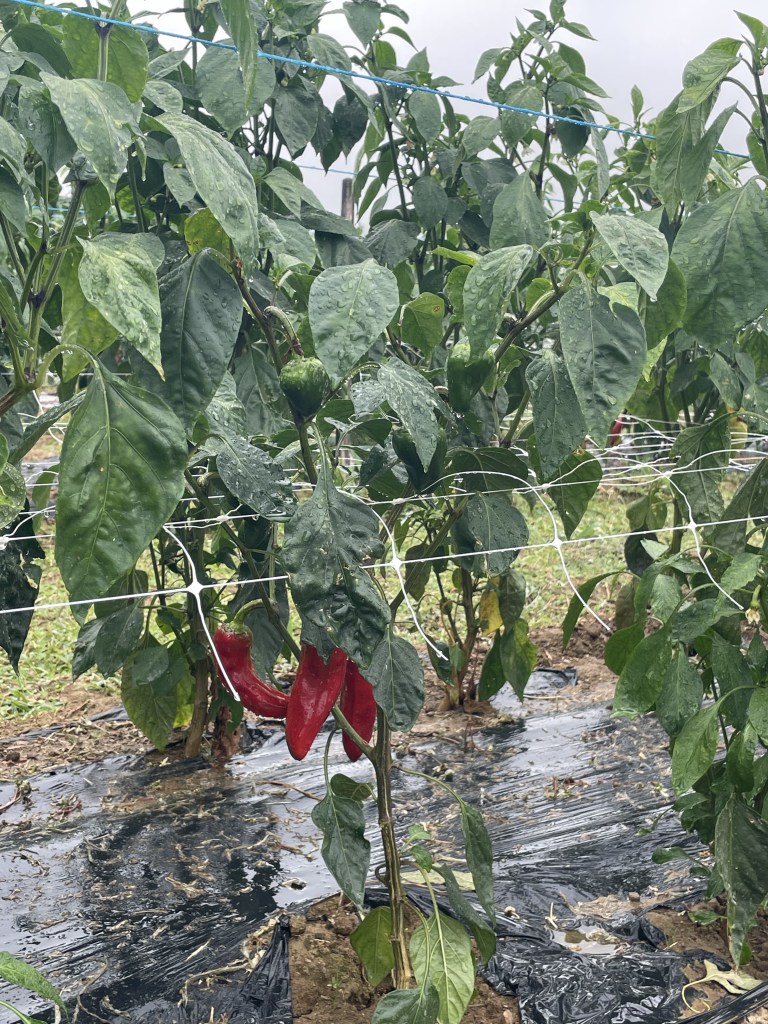
Scientists believe that capsicum annum was originally domesticated in Central Mexico about 6500 years ago. Capsicum annum is the species of pepper that has given rise to so many different cultivars, or types of peppers. You can see how the word cultivar is related to cultivate. Cultivars are sub types of a plant that have been carefully selected and nurtured by people in a specific region. As a result, the one species of plant has given rise to an amazing variety of chiles of different shapes, heat, and flavor notes. These, in turn, have influenced local food cultures. With the exploitation of Central America by Europeans in the 16th century, capsicum began to spread around the world to destinations as far ranging as Korea (gochugaru used in kimchi), Thailand (Thai bird’s eye peppers), France and northern Spain (piment d’Espelette), and Africa (West African bonnet chiles).
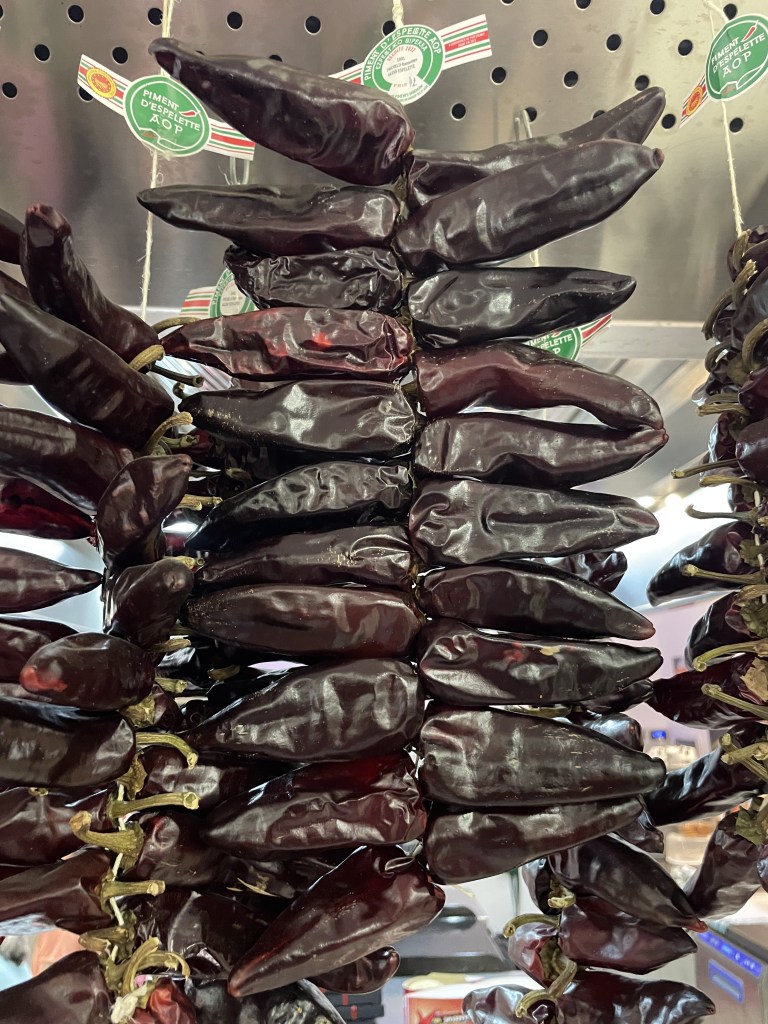
Peppers from what is now Mexico and South America arrived in the Basque country of southwest France and northern Spain in the 1600s. Black pepper was rare and very expensive and was used only by the very wealthy. Basque women were introduced to capsicum annum that was brought into the area and recognized its value in flavoring food and preserving meat. They saved the seeds and began to grow it themselves. The area around Espelette, a small Basque town in France, provided the climate and soil needed for the plants to grow and produce and the attention of the local women provided the skill and knowledge needed to cultivate a new variety of the species — Gorria. In 2000, Piment d’Espelette was recognized as a product from a specific terroir and given the AOC label. In 2003, this designation was upgraded to AOP to further protect the distinctive production methods, taste, and cultural value of these peppers.
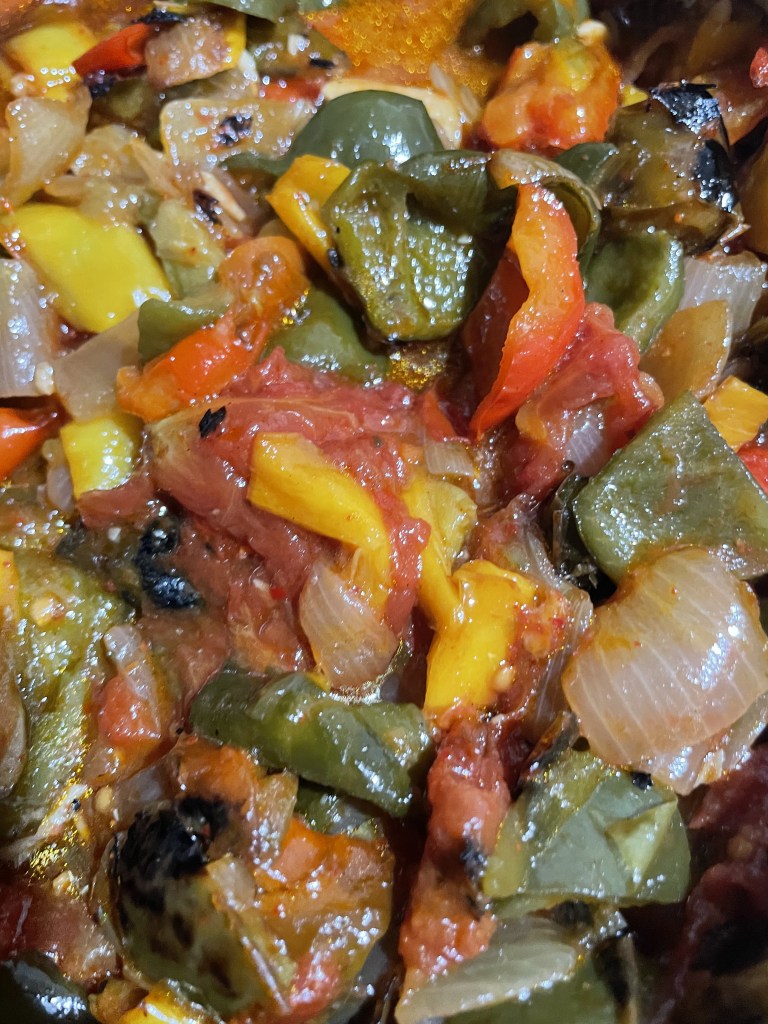
Last summer, I spent some time in the Basque country in France. This obviously necessitated a trip to the town of Espelette and a tour of a piment farm and production facility. It also meant that I had to try out various products seasoned with Piment d’Espelette — cured sausages and hams, chocolates, liqueurs, and a delightful dish called “piperade.” Piperade is a bit like a Basque version of ratatouille — peppers, onions, garlic, tomatoes (thanks again to the indigenous Mexicans!) and Piment d’Espelette. It does not have eggplant and squash. It was mostly served as a side dish along with steamed potatoes (thank you indigenous peoples from the Andes!) and some kind of meat or fish.
Piperade
I am part of a CSA this summer, so I am adapting recipes to the produce I receive each week. I have been collecting a variety of sweet peppers of many colors. So this recipe is an adaptation of what might be more traditionally tasted in France. This recipe was made following the directions in the NY Times and the Splendid Table. Note that many of the quantities are completely arbitrary. What is a medium sized onion? How big are those garlic cloves? Follow your own sense of taste.
3 plum tomatoes, peeled and coarsely chopped. (to peel tomatoes, cut a small x at the base of the tomato, dunk into boiling water for 30 seconds or so, and then remove and cool down in a bath of icy water. The skin should peel right off.
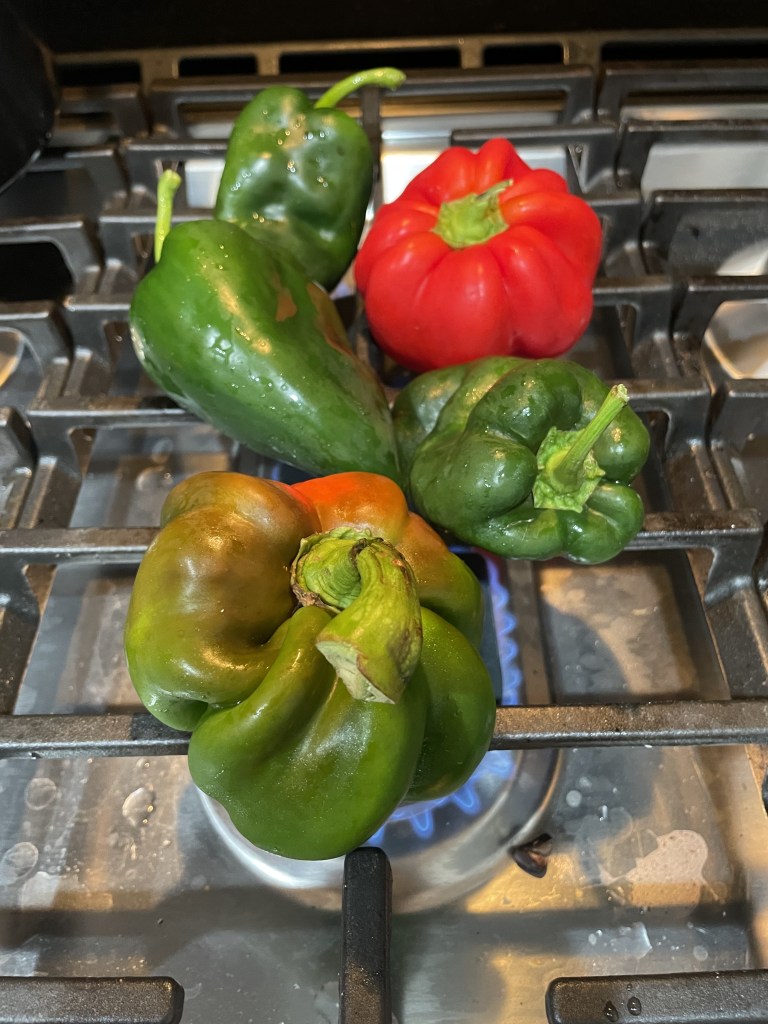
A variety of bell peppers (any color or size) about 3-4. I roasted the bell peppers on my stove top before removing the stems, seeds and veins. This step is completely optional and not apparently traditional. Slice into strips.
1 medium onion, thinly sliced.
4 cloves garlic, minced.
1/2 tsp salt
1 tsp sugar (I did not use this. Back in the 1600s, sugar was not available for folks like me.)
1/2 to 1 1/2 tsp Piment d’Espelette. I erred on the side of adding more not less. If you are new to this, add a small amount and then adjust the seasoning to taste.
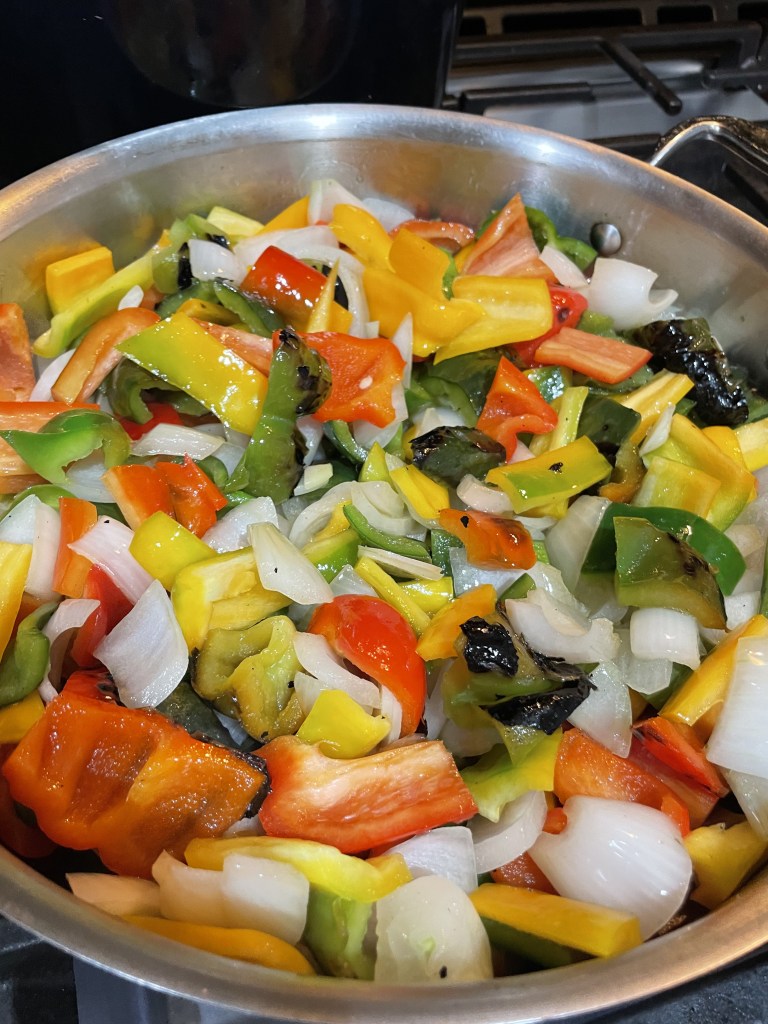
Sauté the onion, garlic, and pepper strips in 1/4 cup olive oil. When the onions are soft, add the tomatoes, salt, sugar, and Piment d’Espelette. Cook over low heat until the peppers are soft and the tomatoes have broken apart. If it is very liquid, cook a few more minutes uncovered to reduce the liquid.
Some recipes have you purée the vegetables. I like the texture and visual of a chunky piperade.
On egin. (According to Google Translate, that means enjoy your meal in Basque.)


 Principal of Cooking