For the past year or so, Netflix has been feeding me more and more K-dramas. It started with the Extraordinary Attorney Woo and then led to others. I am not a good decision maker when it comes to having too many choices, and so I have gotten sucked in to the K-drama world. The ones I watch are mostly fluff. Lots of fairytale romance complete with orphaned children navigating a hostile world alone, love-interest princes (who mostly have their own complex family stories to deal with), and happy endings. These are not the Grimm Brothers fairy tales.
I like to imagine that I am learning a bit about Korean culture through these Disney plot lines. One thing that I am learning is about the importance of food in Korean culture. So many of these storylines feature food as a character of sorts. Maybe that is because of the shows I choose to watch — I like food as a character or plot point! The Korean government probably appreciates this too, as cultural education like food and film are soft diplomatic tools. Using food as a political tool like this even has a name — gastrodiplomacy. This strategy explains why there are so many Thai restaurants in the US. And the spread of popularity about kimchi, K-drama, and K-pop.
Because I watch so much K-drama, Netflix has gotten wise to my tastes and has started offering me A Nation of Kimchi and other Korean food related shows. Each region of South Korea has unique kimchi and “Temple Kimchi” (kimchi made at Buddhist Temples) is yet another version. I imagine that the food traditions of North Korea teem with as many different kimchis as in the South. Here is an article about the history of kimchi from the Journal of Ethnic Foods.
Kimchi has been a part of Korean food for thousands of years. It started as a way to preserve food. In the 1600s, when Portuguese traders brought peppers to the peninsula from Central America, peppers were added to kimchi giving it the red color that we associate with kimchi today.
My basic recipe for Kimchi fried rice is from Cooking Korean Food with Maangchi. Maangchi uses freshly made rice for her fried rice. Other recipes recommend using day old rice. This article in the New York Times suggests that left over rice may be more beneficial for gut health. The cooling process changes some of the structure of the carbs in the rice which changes how you digest the carbs. I opt to cook my rice in advance of using it for fried rice of any kind. Browsing around on the internet led me to my current version of kimchi fried rice.

Kimchi Bokkeumbap
- 3 cups leftover short grain rice
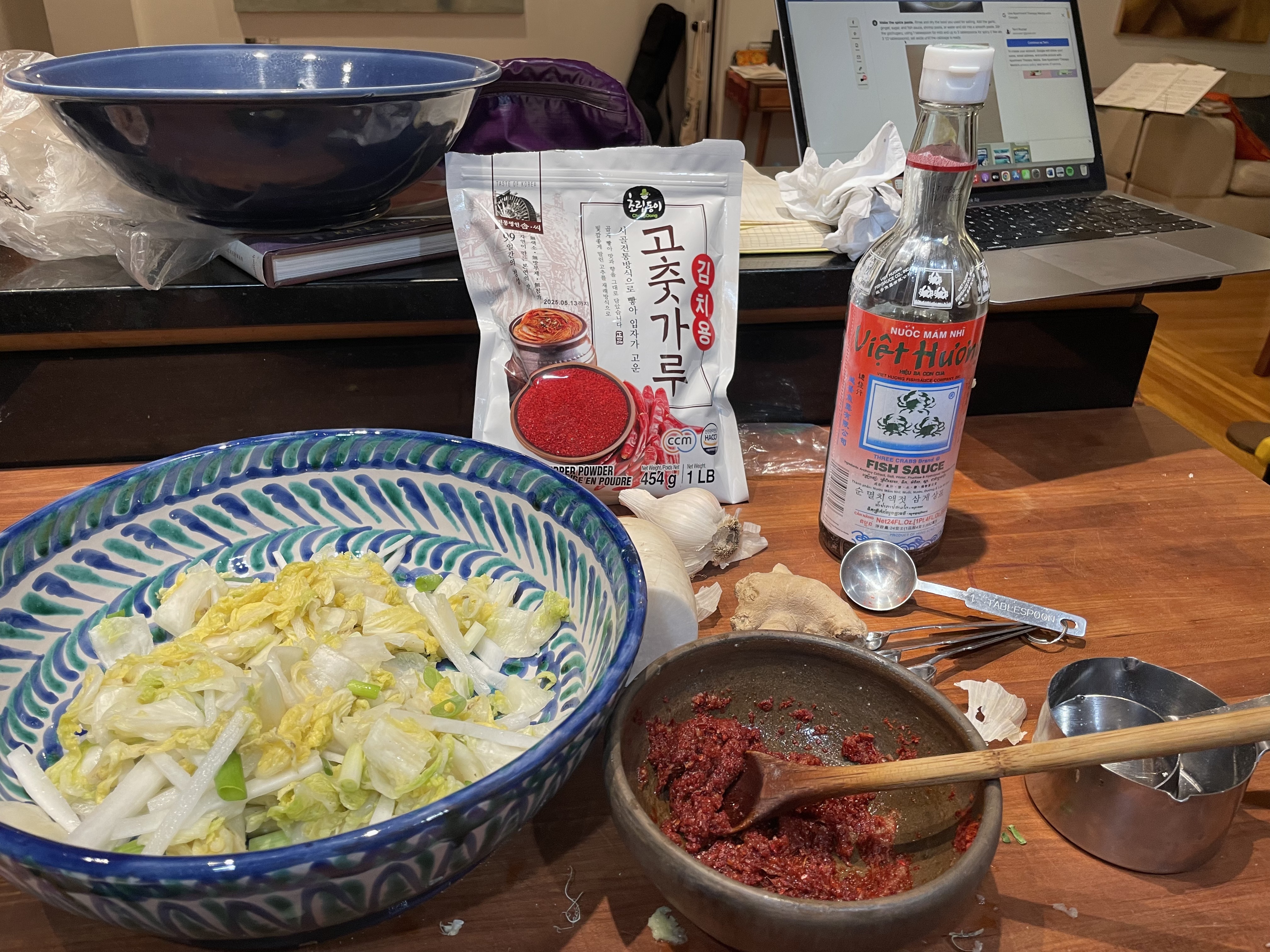
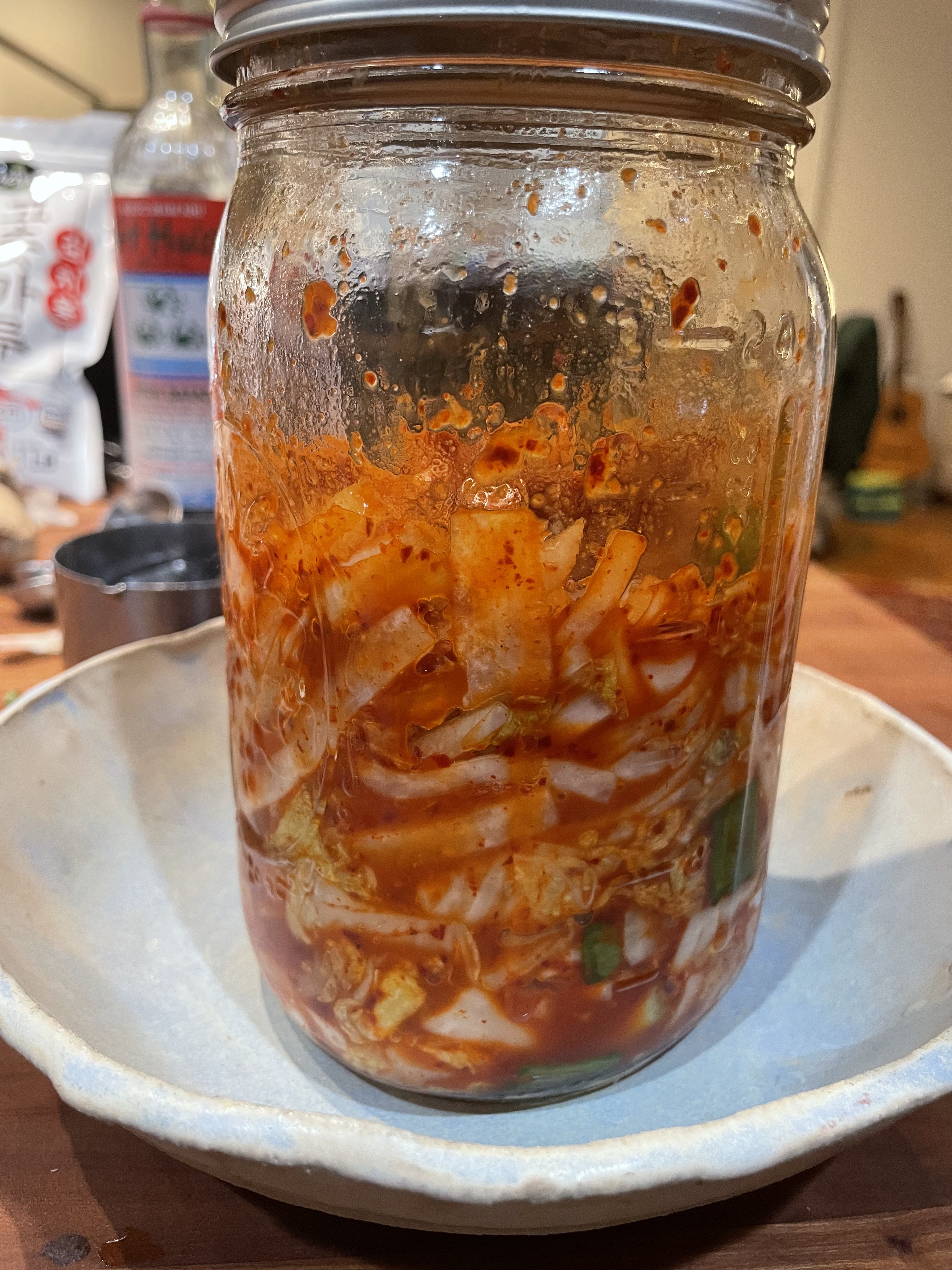
- 1 cup kimchi (you can buy ready made kimchi or can make your own. I have been making kimchi with my produce from my CSA this summer — next up — kimchi radishes. Here is a recipe by Eric Kim at Food52 to get you started. Google can lead you to many others.)
- 3-4 scallions, sliced into 1 inch chunks. I sliver up the green tops to add as garnish for serving.
- 6-8 ounces of mushrooms — I use a packet of beech mushrooms that I get at H-Mart. I suppose any time of mushroom would do.
- Pork belly cut into smallish pieces (optional)
- 2 – 3 tablespoons Gochujang sauce
- Sesame oil
- Vegetable oil
- Optional garnish — fried eggs, sesame seeds, scallions greens, shredded strips of gim (aka nori seaweed)
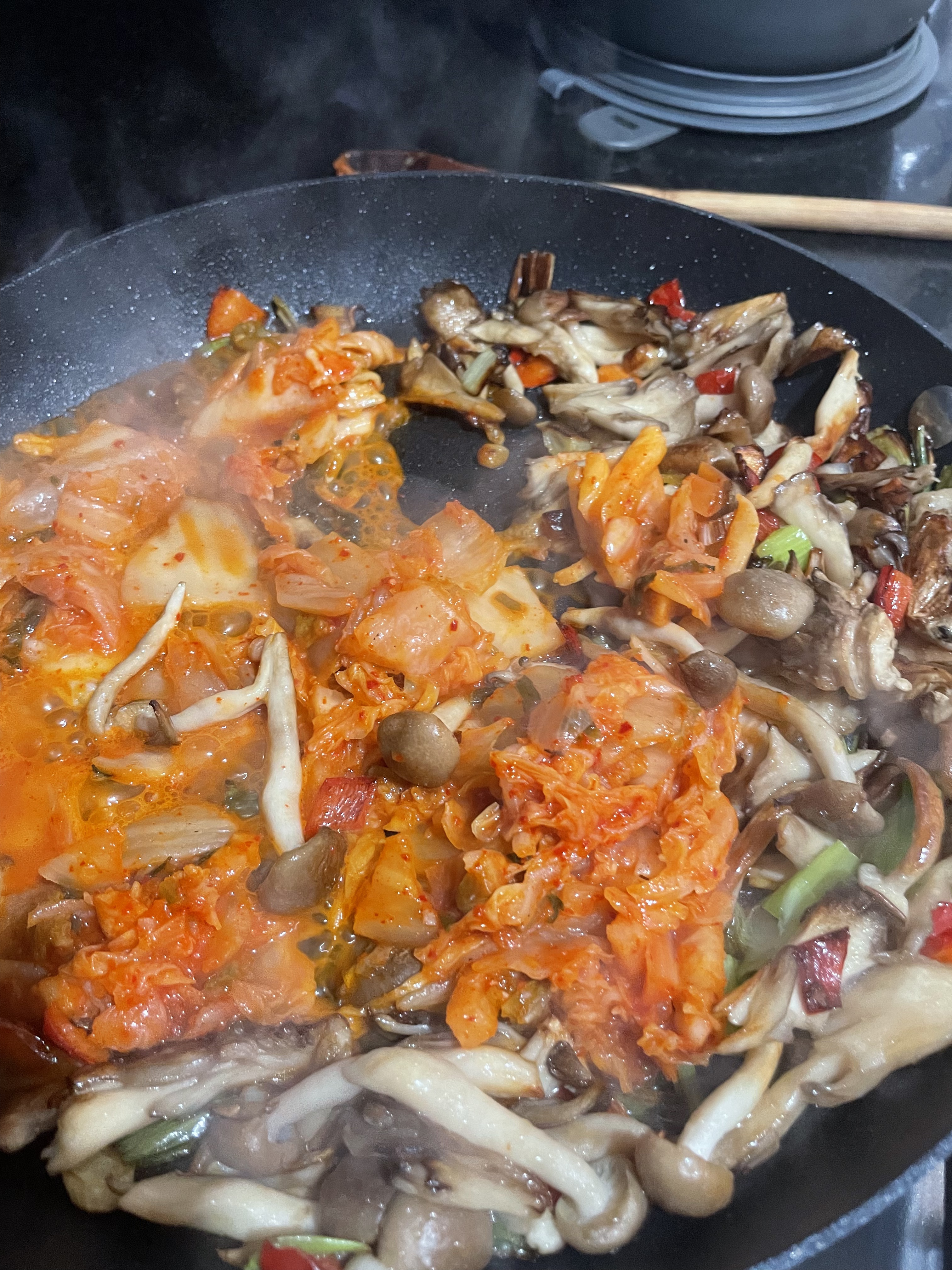
Add 2 T vegetable oil to a large sauté pan. Sauté the scallions and mushrooms. Try to get the mushrooms a bit brown. Don’t be afraid to tend to them over high heat. Remove from the pan.
If you opt to use pork belly, fry the pork belly in the same pan until it is crispy. If you like, you can drain off some of the fat before adding the kimchi, mushrooms and scallions to the same pan. Sauté for a minute or so before adding the rice and the gochujang. Stir together with a wooden spoon, breaking up the chunks of rice. When it is well heated, drizzle 2-3 tsps of sesame oil over the rice.
To up the protein content, serve with a fried egg.
Garnish with strips of gim, sesame seeds, and or scallions.
 Principal of Cooking