I am spending a lot of effort preparing for my trip to Asia. Part of this work is studying the food. The other week, I went to a Vietnamese restaurant for a bowl of pho. I am going to a Japanese tea shop tomorrow. I also received a great cookbook on Korean food for Christmas — The Korean Cookbook by Junghyun Park and Jungyoon Choi.
I am somewhat familiar with Chinese, Japanese, and Vietnamese food. Until I started studying, however, I did not know much about Korean food. I am learning to make better rice. I am trying out different kinds of kimchee. I am also learning about banchan, the largely vegetable based side dishes that are an important part of Korean meals, and rice dishes.
This Korean cookbook has recipes with a number of ingredients that are new to me. Luckily, I have an HMart a short walk away. Since I mostly cook for one, I strive for recipes with fewer ingredients and less work. I am also working towards a more plant based diet.
Mushroom Bibimbap is a recipe I came across that fits both of these criteria. I also think that our meals should have multiple colors in them. A meal with different colors contains a greater variety of vitamins, minerals, enzymes, and other healthy things than a meal that is more monotone. I browsed the chapter on Namul, seasoned vegetables, particularly plants withe edible stems and leaves. I went with spinach namul first. Next time I am going to try bean sprout namul.
Mushroom Bibimbap
2 cups short grain rice, cooked.
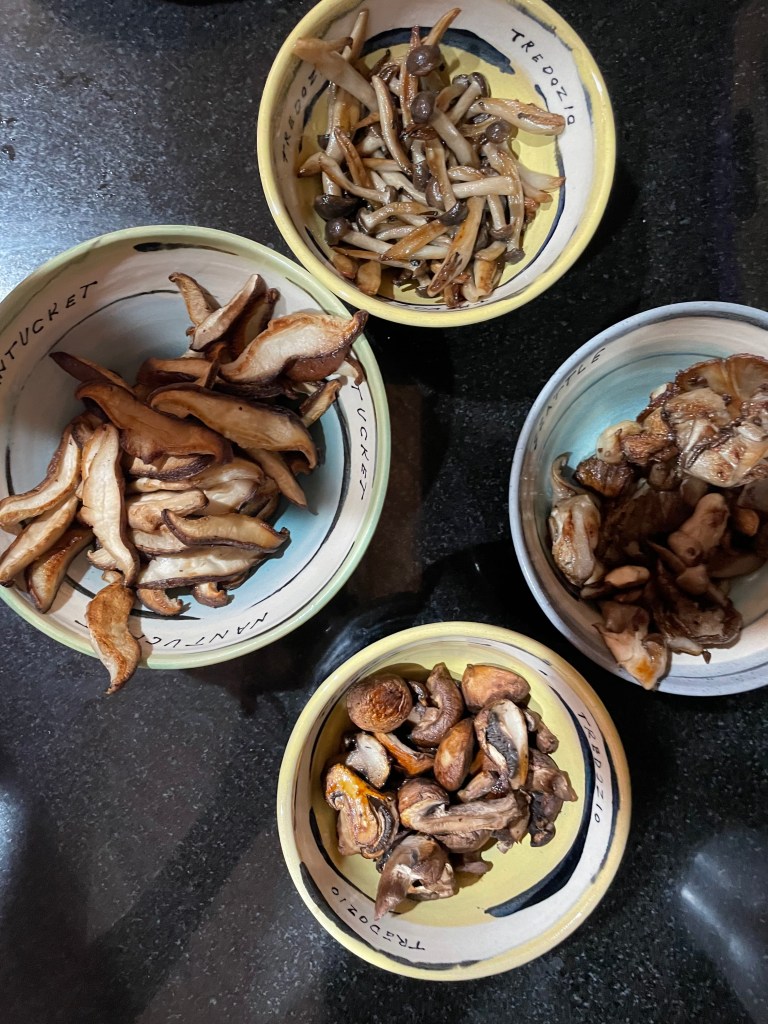
Mushrooms — oyster, trumpet, shiitake, beech, etc. About 500 grams total. The shiitake and trumpet mushrooms should be sliced into 1/8 inch slices. The oyster mushrooms should be shredded with your hands. The beech mushrooms need to have the base roots cut off and then separated. The mushrooms should be sautéed in neutral oil separately.
Sauce — mix together the following:
3 tablespoons ganjang (Korean soy sauce)
1 tsp sugar
1 tsp gochugaru
2 tbsp sesame oil
2 tbsp minced scallions
To serve, put one cup of cooked rice in a bowl, top with a variety of sautéed mushrooms and a fried egg. Serve the sauce on the side.
Spinach Namul
Blanch 8 oz of cleaned spinach in boiling salted water for 15-20 seconds. Strain and let cool. Gently squeeze out the extra water.
Mix 1 tsp cheongjang (light Korean soy sauce) or 1 tbs doenjang (Korean fermented soy bean paste), 2 tbsp sesame oil and 1 tbsp ground sesame seeds.
Toss the spinach with the sauce and serve on a shallow plate.



Sounds easy… but somehow I am intimidated!
I’s love to go to a Japanese tea room together!
LikeLike